Unwrapping Spotify’s Top 10 Artists from 2021 to 2023

In a world where volumes of data determine the idea of success, what the do these stats even mean? and most importantly, should we care?

The Spotify wrapped dilemma

The Spotify Wrapped trend in 2023 stirred significant controversy. Both artists and consumers expressed dissatisfaction with the streaming data provided, questioning its true value and the potential for Spotify to offer more insightful information that could benefit both parties.

With this in mind, I examined datasets featuring the most popular songs from 2021 to 2023. This analysis aimed to uncover qualitative aspects of these top songs and investigate any commonalities that might explain their success.

Mapping the Trends: Analyzing the 2021 Top 10 Through Visualization

To analyze the Top 10 songs of 2021, I examined the correlation between the songs' rankings, their popularity, weeks on the chart, and peak positions. This analysis enabled me to construct a network that highlights the most popular artists of 2021.

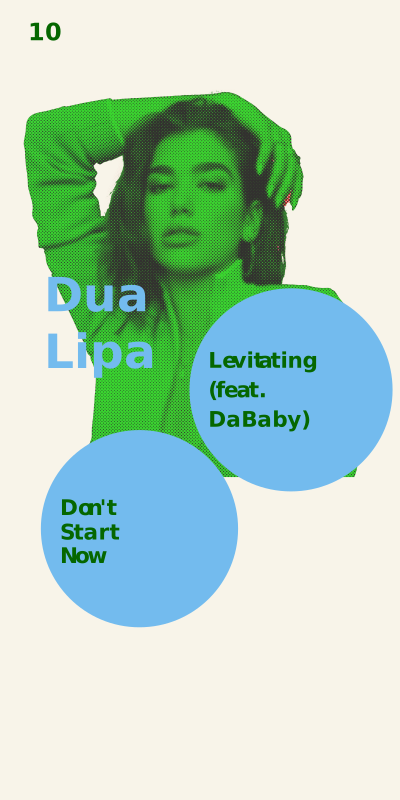
The visualization reveals a diverse representation of genres, including American pop, K-pop, European alternative pop, and Latin pop, showcasing the variety that dominated the charts in 2021.
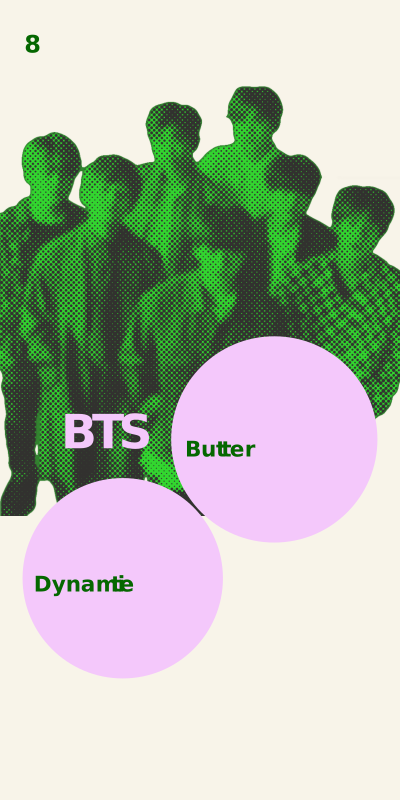
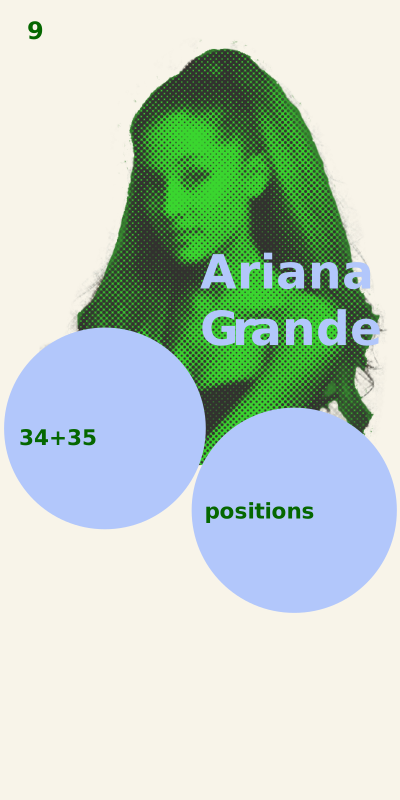
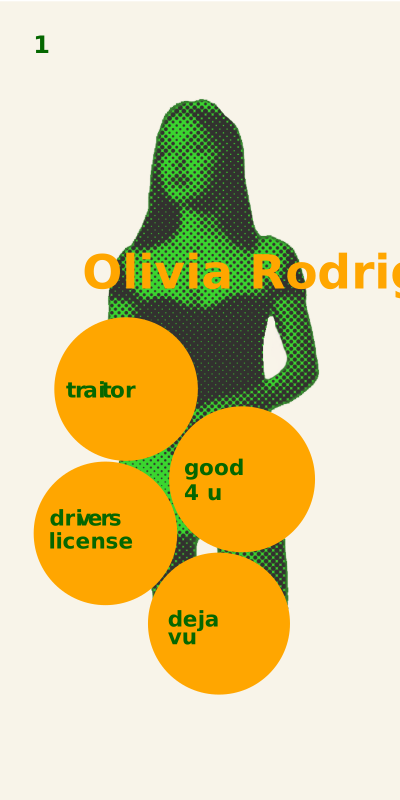
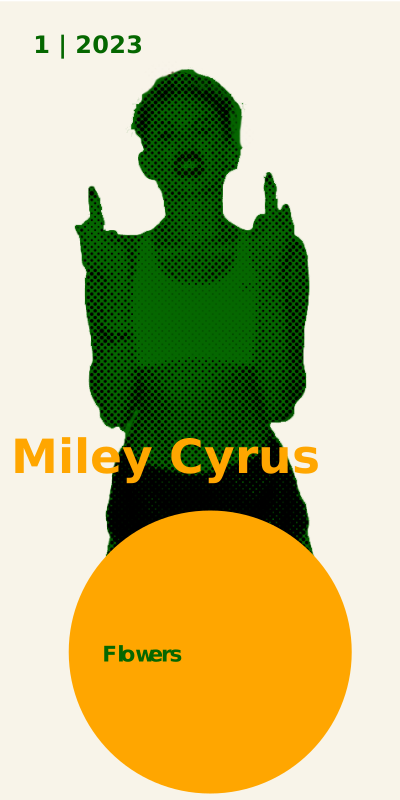
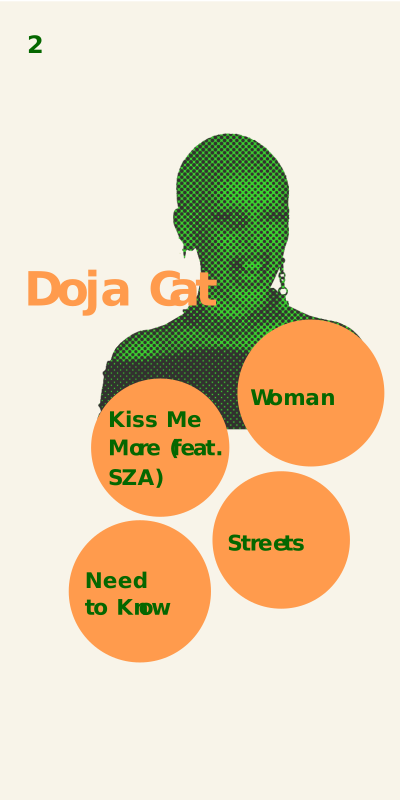
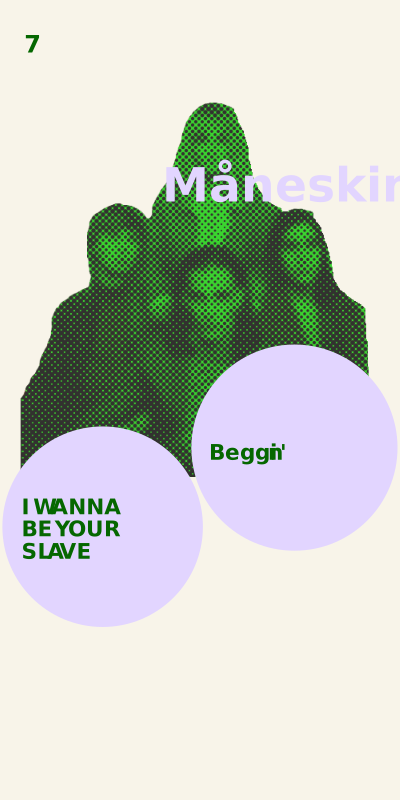
Women represent 40% of top 10 artists and 66% of artists ranked in the Top 3 Positions in Spotify

From 2021 to 2023

Decoding the Sound of the Top 10 Hits

Music listening has evolved alongside human progress and technological advancements.

For 2023, we can analyze the sonic characteristics of songs to understand the most popular combinations of tonality and tempo within top-ranked tracks.

Let’s explore how these elements appear in the rankings and uncover what makes a pop song most likely to chart.

Correlation of Most Streamed Songs’ Tonality and Tempo

2023

The most popular combination for charted songs is G# at 120 bpm

This is very interesting as we will see later on in the emotional intent of this specific key is associated with Death, Eternity, Judgement.

There are a couple of runners-up with the G Tonality in 130 and 120 bpm as well as the C# Tonality at 102 bpm, showcasing the more modern Latin and techno incursions in music trends. This variety in tonalities and tempos highlights the evolving landscape of contemporary music, where diverse influences and styles converge to create chart-topping hits. These findings emphasize the eclectic nature of popular music today, reflecting a blend of traditional pop elements with innovative sounds from various genres.

Top 2023 Artists and Charted Song Bpm

In the top 10 we can see a representation of almost all the possible range of song tempos. However, the largest jump in tempo is between 122 and 144 bpm, characteristic of more club focused and undergorund electronic and alternative music.

Top 2023 Artists and Charted Song Keys

The most popular song keys in the top 10 are D and F#

Musical Key Emotional Characteristic
C Major Innocently Happy
C# Major Grief, Depressive
D Major Triumphant, Victorious War-Cries
D# Major Cruel, Hard, Yet Full of Devotion
F Major Furious, Quick-Tempered, Passing Regret
F# Major Conquering Difficulties, Sighs of Relief
G Major Serious, Magnificent, Fantasy
G# Major Death, Eternity, Judgement
A Major Joyful, Pastoral, Declaration of Love
A# Major Joyful, Quaint, Cheerful
B Major Harsh, Strong, Wild, Rage

Here we can see the two most popular song keys are conveying a triumphant, victorious war-cry and the sense of conquering difficulties and sighs of relief.

Could we then interpret that the songs that are more popular are responding to a more global emotional state and thus contributing to their popularity? If analyzed further there's a possibility of finding a correlation between the emotional intentions of ranked songs and the general state of the audience.

Now that we've explored the sound of pop music, let's look at who's actually at the top — and why.

The Artist Network: Who You Know Matters as Much as What You Make

Think of the music industry as a city. Some artists live in the center — surrounded by other well-connected people, easy to find, constantly referenced. Others live on the outskirts — talented, but harder to reach, with fewer roads leading to them.

On Spotify, this geography is real. The platform's recommendation algorithm doesn't just respond to your music — it responds to your position in a network of relationships. Who you've collaborated with, who covers you, who gets played in the same playlists. The closer you are to the center of that network, the more likely Spotify is to recommend you to new listeners.

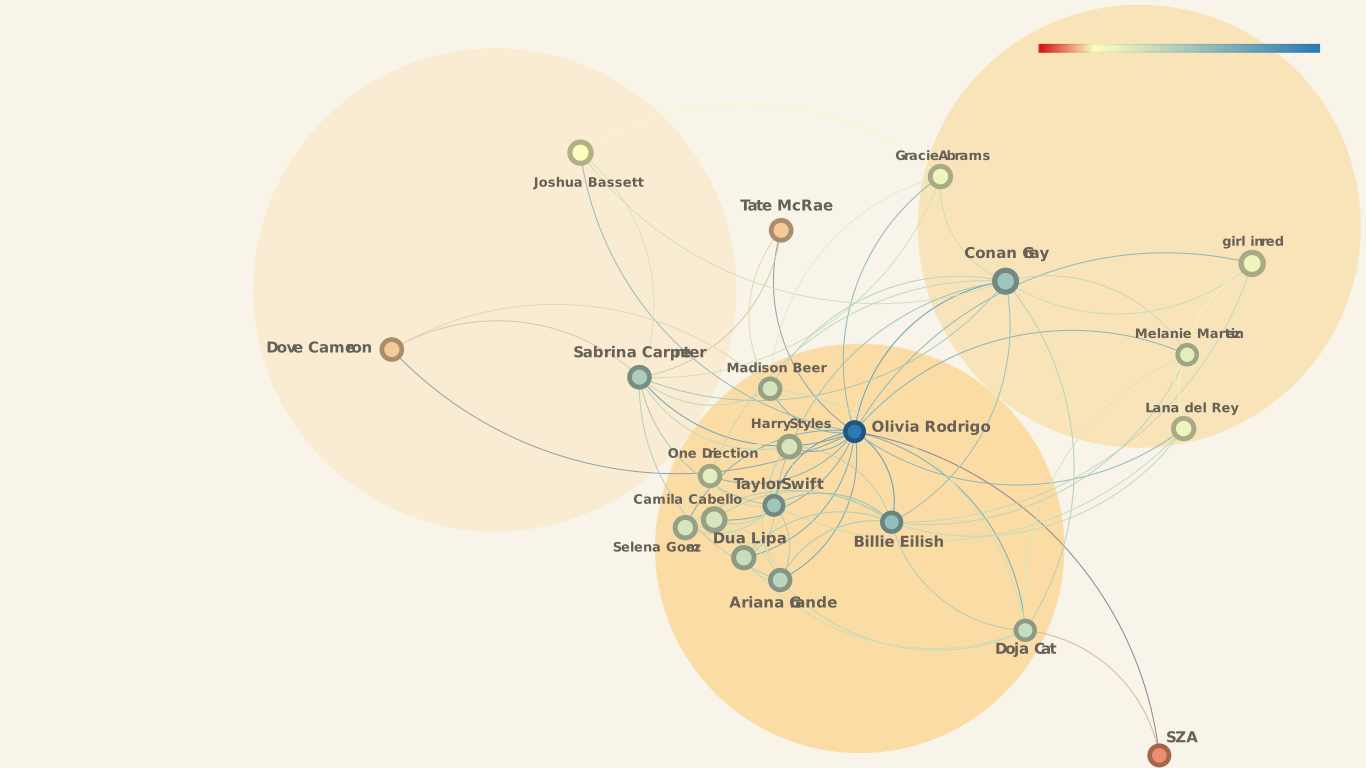
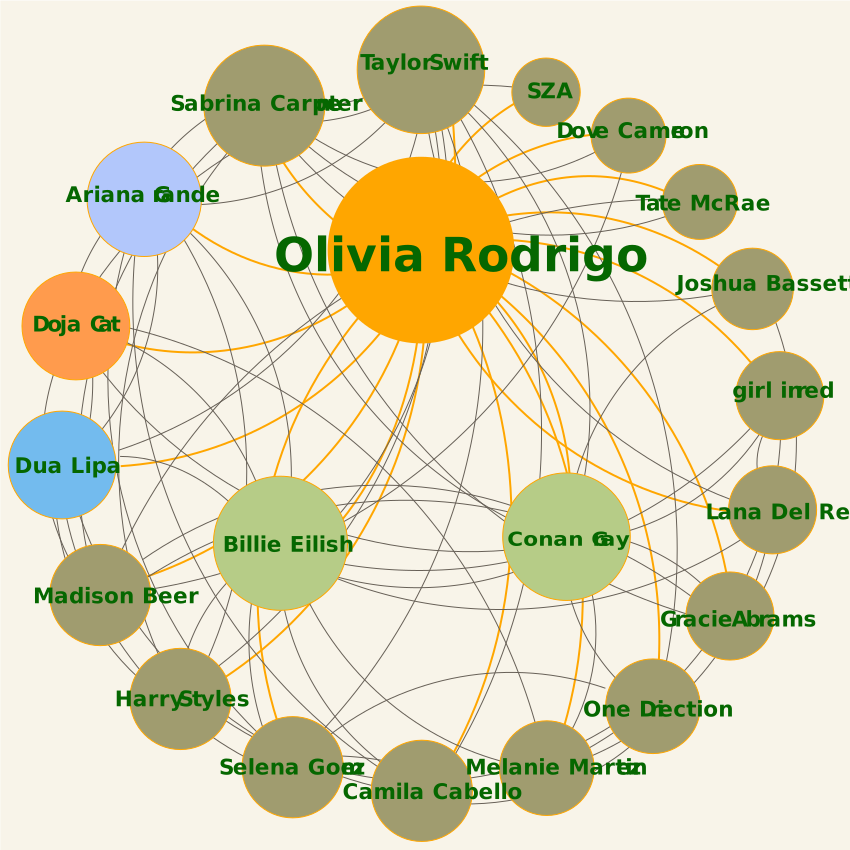
The graph below shows the artist network for Olivia Rodrigo, with a filter of 0.029 Closeness Centrality. Ranking only 20 other artists with this degree of relationship. This may infer low probability of being recommended by the Spotify Algorithm if not in the immediate circle of any specific artist.

Olivia Rodrigo's Network: What Being at the Center Actually Means

The network map shows Olivia Rodrigo at the core, surrounded by the artists most closely associated with her on the platform. Think of each dot as an artist, and each line connecting them as a relationship — a collaboration, a shared playlist, a stylistic affinity that Spotify's system has recognized and recorded.

A few things stand out immediately.

She's directly connected to about 7 artists in her immediate circle — and 3 of those are also in the overall Top 10. That's not a coincidence. Being close to other top-charting artists amplifies visibility in both directions. Their audiences become potential your audience. The algorithm reads proximity as relevance.

The network is relatively fluid. There aren't rigid walls between artist communities — the connections flow across genres and styles. For artists and their teams, this is actually good news: the boundaries between audiences are more porous than the industry sometimes assumes. A well-placed collaboration can open doors into entirely new listener bases.

If you're not in the immediate circle, the algorithm is less likely to find you. Artists on the edges of the network — connected by only one or two relationships — have significantly lower algorithmic visibility, regardless of how good their music is. This is the part that matters most for any artist or manager reading this: your network position is a strategic asset, not just a social one.

The Label Network: Three Companies Own the Top 10

Behind every artist is a label. And behind most labels is one of three companies.

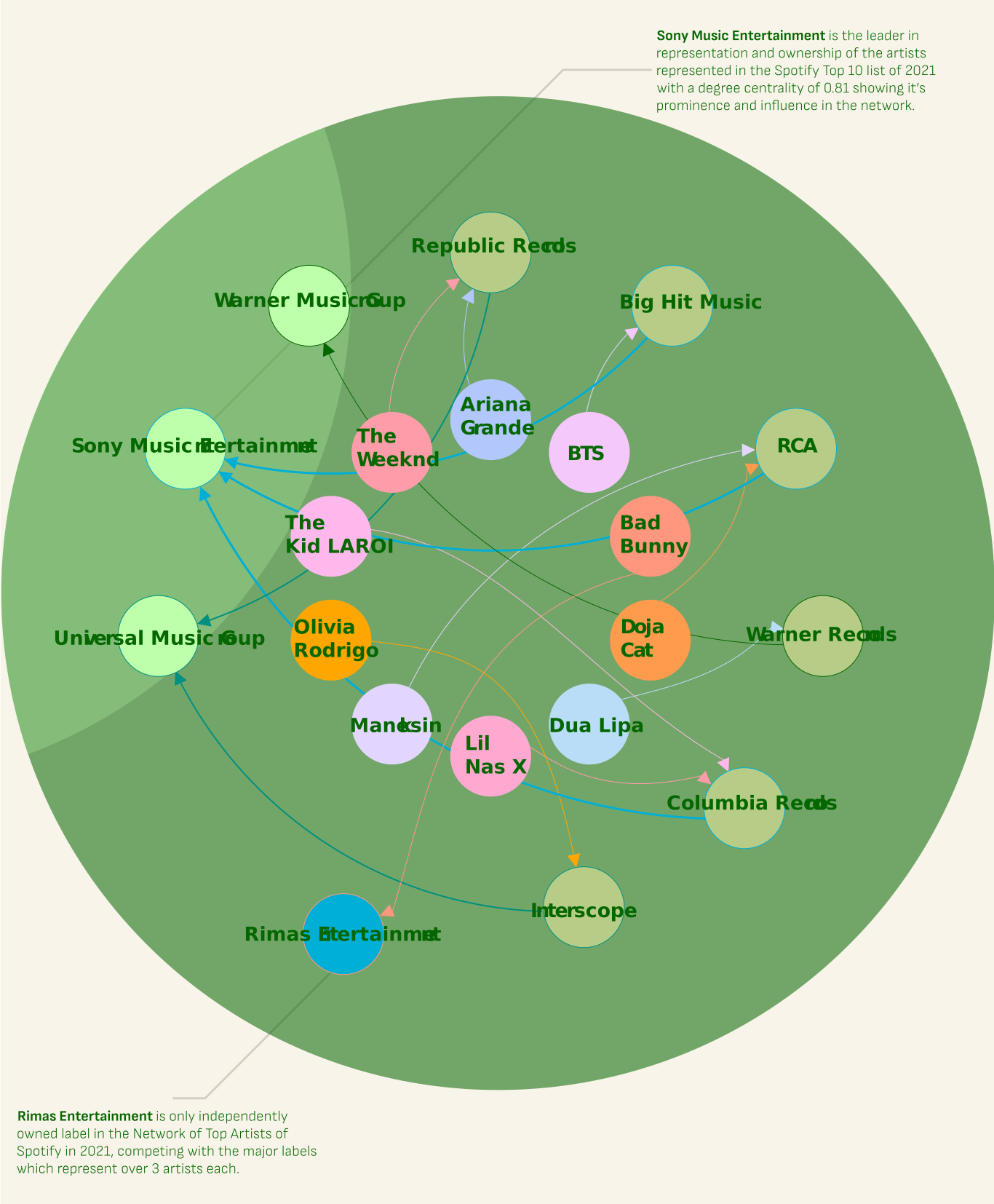
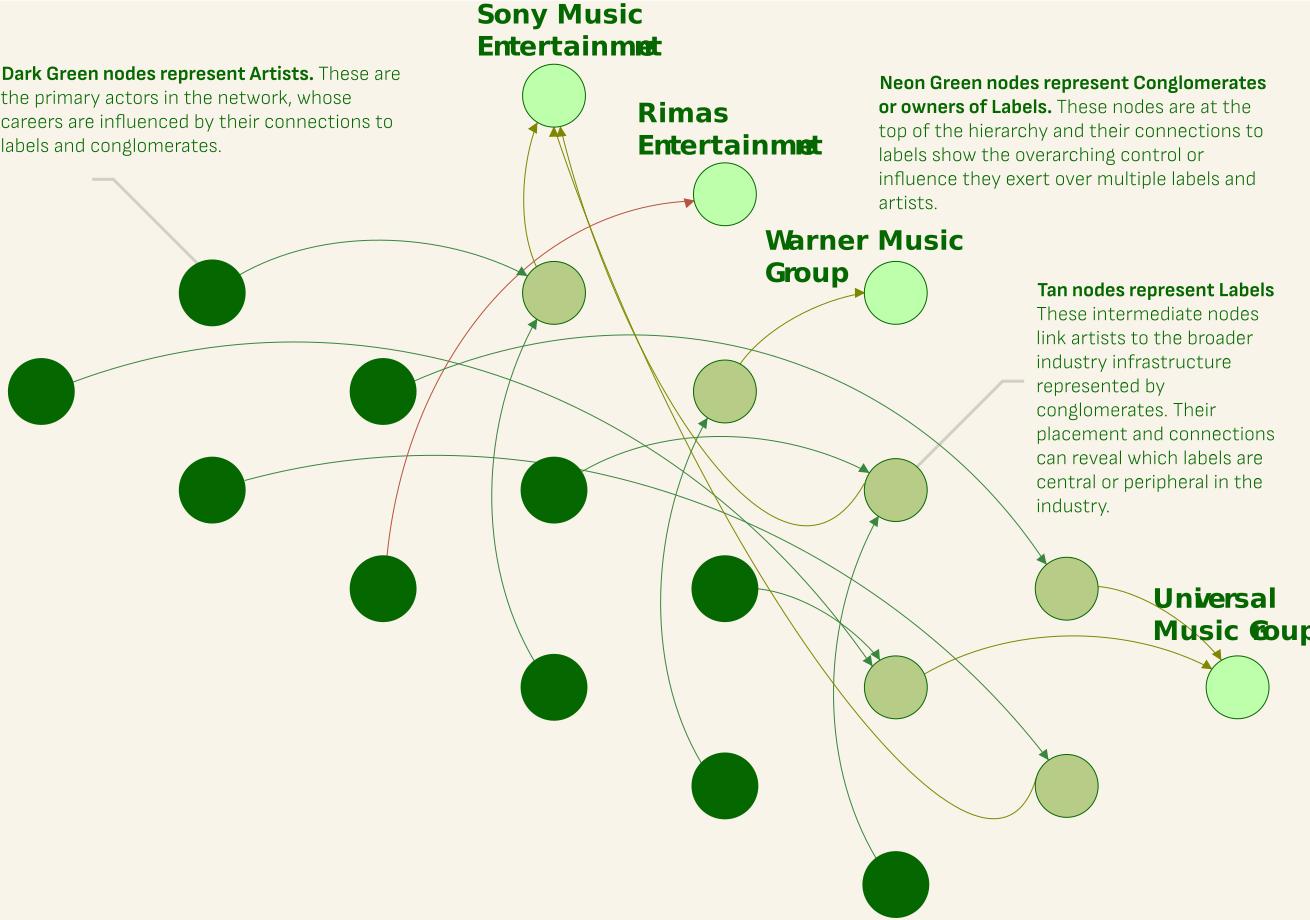
Universal Music Group, Sony Music Entertainment, and Warner Music Group — the Big Three — dominate the top of the charts through a web of subsidiary labels, each positioned to serve a different market segment.

For independent artists, this is both sobering and clarifying. The odds of reaching the top without major label infrastructure are very low — unless you build a community so large and loyal that the platform has no choice but to respond to it.

The network diagram makes this visible in a way a list never could. You can see how Republic Records (Universal) clusters around artists like The Weeknd and Ariana Grande. How RCA (Sony) houses more independent-leaning acts like Måneskin and Doja Cat. How the conglomerates connect upward to each other through shared distribution infrastructure and cross-label deals.

The Top 10 Heirarchical Network

What This Means for Artists, Managers, and Marketers

The network analysis points to three practical conclusions:

1. Collaboration is infrastructure.

The fastest path to algorithmic visibility isn't a bigger marketing budget — it's proximity to artists who already have it. Strategic collaborations, features, and playlist placements with well-connected artists do more for discoverability than almost any other lever available.

2. Your label's network is part of your network.

Signing with a label isn't just about advances and distribution. It's about inheriting a position in a network of relationships — with other artists, with playlist curators, with the platform itself. Understanding where a label sits in the broader ecosystem is as important as understanding the deal terms.

3. Independence is possible

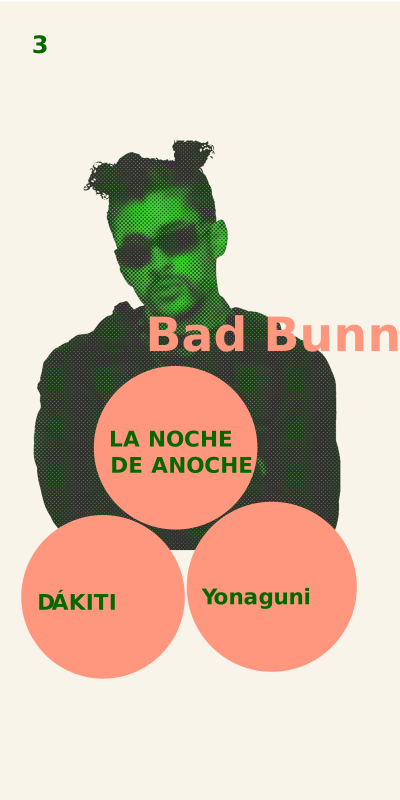
but it requires building a community, not just an audience. Bad Bunny's position in the Top 10 as an independent artist isn't the result of a hit song. It's the result of years of building a movement that operates outside the traditional industry structure. Streams follow culture. Culture follows community.

Conclusion: The fastest way to the top is by collaborating

The data tells a consistent story across all three years of this analysis. The artists at the top aren't just talented. They're well-connected — to other artists, to labels with deep platform relationships, to communities of listeners who identify with them beyond the music itself. The sonic formula matters: emotionally resonant keys, tempos that work across contexts, production that travels well across markets and playlists. But the network structure underneath is what makes sustained chart presence possible. For anyone working in music — as an artist, a manager, a marketer, or a label — the most important strategic question isn't "how do we make a better song?" It's "how do we build a better position?" The answer, consistently, is the same: find the right collaborators, build the right community, and let the algorithm follow.